Blog Post: Brand Identity
Brand Identity for Businesses and SMEs in Mauritius: Why It’s More Than Just a Logo
Ask a small business owner in Mauritius what their brand identity is, and many will point straight to their logo. It’s an understandable assumption — the logo is often the most visible, most talked-about design element a business has. But brand identity is something much bigger than a single image. It’s the complete visual and emotional impression your business leaves on every customer, across every interaction, from the first glance at your storefront to the tone of a customer service reply on WhatsApp.
For SMEs and entrepreneurs across Mauritius, building a clear, consistent brand identity is one of the most underrated investments available — not because it looks impressive, but because it directly shapes how trustworthy, professional, and memorable a business appears in a market where customers often have several similar options to choose from.
This post breaks down what brand identity really means, why it matters so much for Mauritian SMEs specifically, and how to start building — or strengthening — yours.
What Is Brand Identity, Exactly?
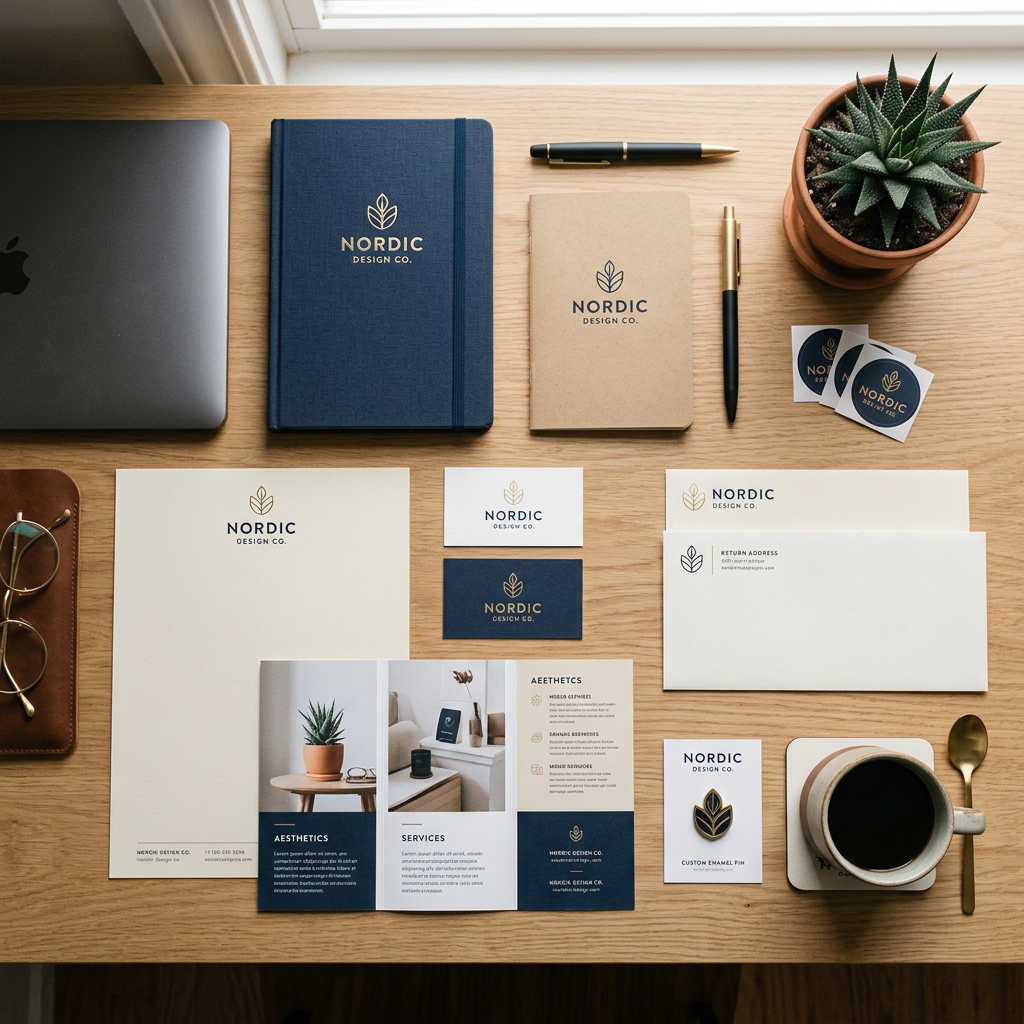
Brand identity refers to the collection of visual and verbal elements that represent how a business presents itself to the world. It includes, but goes well beyond, your logo:
- Logo and logo variations (icon-only versions, horizontal versus stacked layouts, light and dark versions)
- Color palette used consistently across every touchpoint
- Typography — the specific fonts used in headlines, body text, and marketing materials
- Imagery style — the type of photography, illustration, or graphics that represent the brand
- Tone of voice — how the business communicates in writing, whether formal, playful, warm, or authoritative
- Brand guidelines — a documented reference that ties all of the above together consistently
Brand identity is different from branding in general, which also includes intangible elements like reputation, customer experience, and company values. Think of brand identity as the tangible expression of a brand’s deeper positioning — the visual and verbal language that communicates who you are before a customer has read a single word about what you actually offer.
Why Brand Identity Matters So Much for SMEs in Mauritius
1. It Builds Instant Recognition
In a market where customers are exposed to dozens of businesses daily — through social media, storefronts, and word of mouth — a consistent, distinctive brand identity helps your business stand out and stick in people’s memory. A customer who recognizes your colors, logo, or overall style immediately feels more familiar with your business, even before engaging directly.
2. It Signals Professionalism and Trust
Customers naturally, if sometimes unconsciously, associate visual consistency and polish with reliability. A business with a clear, well-executed brand identity feels more established and trustworthy than one with mismatched colors, inconsistent logos, or amateur-looking materials — regardless of how good the actual product or service is.
3. It Creates Consistency Across Every Touchpoint
Customers in Mauritius encounter businesses across many different channels: a physical storefront, a Facebook page, a website, printed materials, and word-of-mouth referrals. A strong brand identity ensures that no matter where someone encounters your business, the experience feels cohesive and familiar rather than disjointed.
4. It Differentiates You From Competitors
In competitive local sectors — tourism, hospitality, retail, professional services — many businesses offer genuinely similar products or services. A distinctive, well-thought-out brand identity can be the deciding factor that makes a customer choose your business over a nearly identical competitor.
5. It Supports Premium Positioning
Businesses with strong, considered brand identities are often perceived as offering higher quality or greater value, even when pricing is comparable to less polished competitors. For SMEs looking to move away from competing purely on price, brand identity can play a significant role in supporting a more premium market position.
Core Components of a Strong Brand Identity
A Well-Designed, Versatile Logo
Your logo should be simple enough to remain recognizable at small sizes — a social media profile picture, an app icon, a small tag on packaging — while still capturing the personality of your brand. Overly detailed or trendy logos often age poorly and struggle to scale across different formats.
A Deliberate Color Palette
Colors carry psychological and cultural associations that influence how a business is perceived, often before a customer processes any text at all. A deliberate, limited color palette — rather than a broad, inconsistent mix — helps reinforce recognition and communicates specific qualities, whether that’s warmth, luxury, energy, or reliability.
Consistent Typography
The fonts used across your website, marketing materials, and social media should remain consistent, or at least follow a clear, intentional system (for example, one font for headlines and another for body text). Frequent font changes across different materials can make a brand feel unplanned and inconsistent.
A Defined Tone of Voice
How your business communicates — in social media captions, email responses, or website copy — should feel consistent with your visual identity. A playful, colorful visual brand paired with overly formal, stiff writing (or vice versa) can create a subtle sense of mismatch that undermines trust, even if customers can’t quite articulate why.
Documented Brand Guidelines
Even a simple, one-page brand guide documenting logo usage, colors, fonts, and tone of voice can make an enormous difference as a business grows and more people — employees, freelancers, or agencies — create content and materials on its behalf. Without guidelines, visual consistency tends to drift over time as different people make independent design decisions.
Common Brand Identity Mistakes SMEs in Mauritius Make
Working across different local industries reveals a few frequent patterns:
- Treating brand identity as a one-time logo design project, rather than an evolving, maintained system.
- Inconsistent application across platforms — different colors or logo versions on the website versus social media versus printed materials.
- Copying trends rather than building something distinctive, resulting in a brand that looks similar to several competitors.
- No documented guidelines, leading to gradual visual drift as different people create materials over time.
- Mismatched tone of voice, where the way a business writes doesn’t align with how it visually presents itself.
- Rebranding too frequently, without giving a consistent identity enough time to build genuine recognition among customers.
Brand Identity vs. Graphic Design vs. Marketing: Untangling the Terms
It’s worth clarifying how these related concepts differ, since they’re often used interchangeably:
- Brand identity is the strategic foundation — the colors, logo, typography, and tone that define how a business should look and sound.
- Graphic design is the practical application of that identity into individual materials — a specific social media post, a brochure, a business card. A skilled graphic designer in Mauritius typically works from an established brand identity to create these individual pieces consistently.
- Marketing is the broader strategy of reaching and engaging customers, which includes brand identity and graphic design as foundational tools, alongside efforts like SEO, website design in Mauritius, paid advertising, and social media.
Understanding this distinction helps explain why establishing a clear brand identity early tends to make every other marketing effort — a new website, a social media campaign, printed materials — faster, more consistent, and more effective, rather than starting from scratch with every new project.
How Brand Identity Connects to Your Broader Marketing Strategy
A strong brand identity isn’t an isolated design exercise — it directly strengthens nearly every other marketing effort:
- Website design: Your website should feel like a direct visual extension of your overall brand identity, using the same colors, fonts, and imagery style customers encounter elsewhere.
- Social media: Consistent visual identity across social posts builds recognition faster and makes a brand’s content instantly identifiable, even without seeing the account name.
- Paid advertising: Ad creatives that reflect a consistent, recognizable brand identity tend to perform better over time, as audiences begin to recognize and trust the business behind repeated ads for paid ads in Mauritius campaigns.
- SEO and content marketing: Blog posts, downloadable guides, and other content perform better when visually aligned with the rest of the brand, reinforcing credibility rather than feeling disconnected from the main website experience.
This interconnected relationship is why many growing SMEs eventually choose to work with a dedicated brand identity agency, or a full-service marketing agency in Mauritius that handles branding alongside website design, SEO, and advertising — ensuring every touchpoint reinforces the same consistent identity, rather than each element being designed in isolation by different, uncoordinated sources.
DIY Branding vs. Hiring Professional Support
Many entrepreneurs in Mauritius start out designing their own logo and choosing colors independently, often using free online tools. For a very early-stage business testing an idea, this can be a reasonable starting point.
That said, a few signs typically suggest it’s time to invest in professional brand identity development:
- Your current visual identity doesn’t reflect the quality or maturity of your actual business.
- You’ve noticed inconsistency across your different materials and platforms.
- Competitors’ branding feels noticeably more distinctive, professional, or memorable than yours.
- You’re planning significant growth, a rebrand, or an expansion into new markets or products.
- You don’t have documented guidelines that ensure consistency as your team or list of collaborators grows.
Working with an experienced brand identity agency, ideally one with a strong understanding of the Mauritian market and its specific consumer preferences, can help translate a business’s values and positioning into a distinctive, cohesive identity — one built strategically, rather than assembled piecemeal over time.
Practical Steps to Strengthen Your Brand Identity Today
Even without a full rebrand, there are meaningful steps SMEs can take right now:
- Audit your current visual presence across your website, social media, signage, and printed materials, noting any inconsistencies.
- Define two or three core brand colors and commit to using them consistently everywhere going forward.
- Choose one or two fonts for consistent use across all materials, rather than varying fonts by project.
- Write a short description of your brand’s tone of voice — is it formal, friendly, playful, authoritative? — and use it as a reference for future content.
- Create a simple, one-page brand guide covering logo usage, colors, fonts, and tone, so anyone creating materials on your behalf stays aligned.
- Review your logo’s versatility — does it still look clear and recognizable at a small size, such as a social media profile picture?
Final Thoughts
For SMEs and entrepreneurs in Mauritius, brand identity is far more than a logo — it’s the consistent visual and verbal thread that ties every customer touchpoint together, building recognition, trust, and a sense of professionalism that directly influences purchasing decisions. In a market where customers frequently have multiple similar options to choose from, a distinctive, well-maintained brand identity can be one of the clearest ways to stand out and be remembered.
Whether you’re building a brand identity from scratch or refining one that’s grown inconsistently over time, treating it as a strategic, ongoing priority — rather than a one-time design task — lays a stronger foundation for every other part of your marketing, from your website to your social media to your advertising campaigns.
Share this post